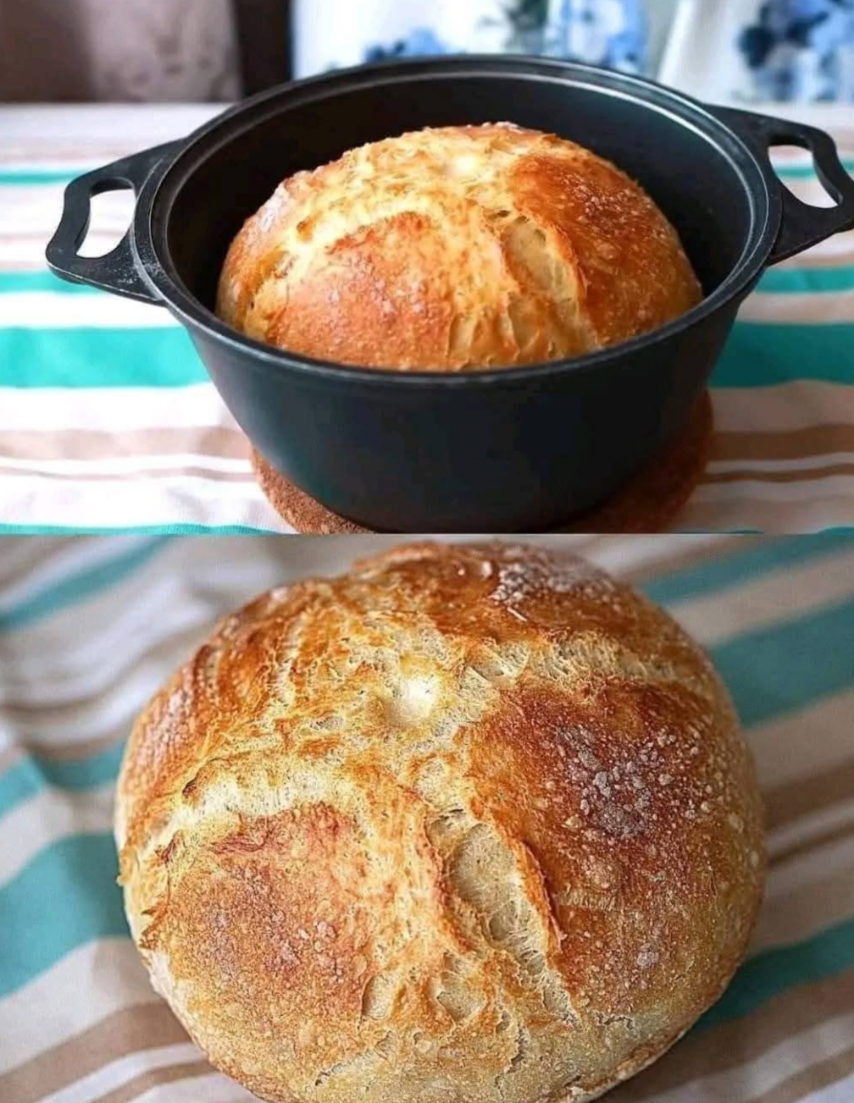
Of course! This is a classic, no-frills recipe for a traditional white loaf of bread. It’s the kind of bread your grandmother might have made—simple, wholesome, and incredibly satisfying. The process is as rewarding as the final result.
The Ultimate Traditional White Bread
This recipe yields one beautiful, soft-crumbed, golden-crusted loaf perfect for sandwiches, toast, or simply slathered with butter.
Yields: 1 loaf
Prep time: 25 minutes (+ 2-3 hours for rising)
Cook time: 30-35 minutes
Ingredients
· 4 cups (500g) Bread Flour (or All-Purpose Flour)
· Bread flour gives a chewier crumb, but all-purpose works great.
· 1 ½ tsp (7g) Salt
· 1 tbsp (12g) Granulated Sugar
· 2 ¼ tsp (7g) Instant Yeast (or 1 packet)
· If using Active Dry Yeast, see note in instructions.
· 1 ½ cups (350ml) Warm Water
· Ideal temperature is around 105-115°F (40-46°C)—warm to the touch, not hot.
· 2 tbsp (30ml) Neutral Oil (like vegetable, canola, or olive oil)
· Extra butter or oil for greasing the bowl and pan
Equipment
· Large mixing bowl
· Loaf pan (9×5 inch / 23×13 cm)
· Clean kitchen towel
· Stand mixer with dough hook (optional, but helpful)
Instructions
Step 1: Activate the Yeast (Skip if using Instant Yeast)
If you are using Active Dry Yeast, combine the warm water and sugar in the bowl and sprinkle the yeast on top. Let it sit for 5-10 minutes until it becomes foamy. This “proofs” the yeast, ensuring it’s alive.
For Instant Yeast (the simpler method): You can mix it directly with the dry ingredients.
Step 2: Make the Dough
· By Hand: In a large bowl, whisk together the flour, salt, sugar, and instant yeast (if using). Make a well in the center and pour in the warm water and oil. Mix with a wooden spoon until a shaggy dough forms. Turn it out onto a lightly floured surface.
· By Stand Mixer: Place the flour, salt, sugar, and instant yeast in the mixer bowl. Attach the dough hook. With the mixer on low, slowly pour in the water and oil. Mix until a dough forms.
Step 3: Knead the Dough
· By Hand: Knead the dough for 8-10 minutes. Use the heel of your hand to push the dough away from you, then fold it back over itself. Turn it 90 degrees and repeat. The dough is ready when it is smooth, elastic, and slightly tacky but not sticky. It should spring back slowly when you poke it.
· By Stand Mixer: Knead on medium-low speed for 5-7 minutes, until the same smooth, elastic stage is reached.
Step 4: First Rise (Bulk Fermentation)
· Lightly grease a large bowl with oil or butter.
· Place the dough in the bowl, turning it once to coat it lightly in oil.
· Cover the bowl with a clean, damp kitchen towel or plastic wrap.
· Place it in a warm, draft-free spot. Let the dough rise until it has doubled in size. This usually takes 1 to 1.5 hours.
Step 5: Shape the Loaf
· Gently punch down the dough to release the air.
· Turn it out onto a lightly floured surface and shape it into a rectangle.
· Tightly roll the rectangle into a log, pinching the seam closed with your fingertips.
· Tuck the ends under and place the loaf, seam-side down, into a greased 9×5 inch loaf pan.
Step 6: Second Rise (Proofing)
· Cover the loaf pan with the towel again.
· Let it rise in a warm place until the dough domes about 1 inch above the rim of the pan. This takes about 45 minutes to 1 hour.
· Preheat your oven to 375°F (190°C) during the last 20 minutes of this rise.
Step 7: Bake to Perfection
· For a soft crust, you can brush the top of the loaf with a little milk or melted butter before baking.
· For a crisp, shiny crust, brush with an egg wash (1 egg beaten with 1 tbsp water).
· Bake for 30-35 minutes. The bread is done when it is deep golden brown on top and sounds hollow when you tap the bottom.
· For an accurate test, the internal temperature should read 190°F (88°C).
Step 8: Cool (The Hardest Part!)
· Immediately remove the loaf from the pan and place it on a wire rack.
· You must let it cool completely for at least 1 hour before slicing. This allows the steam to escape and the crumb to set. Slicing too early will result in a gummy texture.
Baker’s Tips & Troubleshooting
· The Windowpane Test: To check if your dough is kneaded enough, take a small piece and gently stretch it. It should form a thin, translucent “windowpane” without tearing.
· Creating a Warm Spot: If your kitchen is cool, turn your oven on for 1 minute, then turn it OFF. Place the covered bowl inside the warm (not hot!) oven to rise.
· My dough didn’t rise?
· The yeast may be old. Always check the expiration date.
· The water may have been too hot and killed the yeast.
· The environment was too cold.
· My bread is too dense?
· The dough may have been under-kneaded.
· It didn’t rise long enough.
· It was sliced while still hot.
· Adding Flavor: For a richer flavor, you can substitute 1/2 cup of water with 1/2 cup of milk.
Enjoy the incredible aroma and the even more incredible taste of your very own homemade bread. There’s nothing quite like it